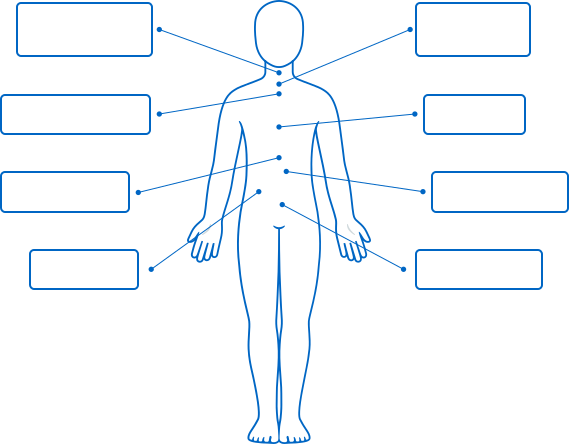
Tobacco causes bad breath and stains your teeth. 17 Smoke can make your clothes and hair stink. 17
Roll over the following text to learn about secondhand smoke.
What is secondhand smoke?
Secondhand smoke is made up of smoke that comes off the burning cigarette and the smoke that the smoker exhales. 20 According to the Surgeon General, "there is no risk-free level of exposure to secondhand smoke: even small amounts of secondhand smoke can be harmful to people's health." 20
Visit www.cdc.gov/tobacco for additional information about diseases and health consequences related to tobacco use.
Young people who smoke cigarettes are likely to be less physically fit and have more respiratory (breathing) problems than people their age who don't smoke.19 Coughing, wheezing, shortness of breath, and phlegm production are symptoms that young people who use tobacco report they are more likely to experience than non-smoking peers.19
And then there's the issue of addiction, making it difficult to stop doing something.
TRUE OR FALSE?
The younger a person is when he or she starts smoking cigarettes, the more likely he or she is to become addicted to nicotine.19
Most young people who smoke regularly are addicted to nicotine, making it hard for them to quit.19
After smoke is inhaled, it only takes 10 seconds for nicotine, an addictive chemical found in tobacco, to reach the brain.15 Cigarettes, vapes and smokeless tobacco both contain nicotine.18 Over time, the nicotine in tobacco can change the way your brain works.18 Nicotine can also narrow a person's blood vessels, making it tougher for the heart to work.17
Chew, dip, snuff, or spit tobacco—it's all smokeless tobacco. But, it's not a safe alternative to smoking cigarettes.16 There are health risks with using smokeless tobacco.
It is a known cause of cancer—increasing a user's risk of oral cancer.
It can cause bleeding gums and mouth sores.
It can lead to nicotine addiction.
Youth and young adults are also uniquely at risk for long-term, long-lasting effects of exposing their developing brains to nicotine. These risks include nicotine addiction, mood disorders, and permanent lowering of impulse control. Nicotine also changes the way synapses are formed, which can harm the parts of the brain that control attention and learning.
Still not convinced it's harmful?
According to the CDC, a high school athlete who used spit tobacco died of oral cancer when he was 19! 17
Smoking also damages the immune system, which increases a person's risk of getting infections. And, once they get sick, smokers often take longer to recover than people who don't smoke. 15
There are 30 adjectives listed on the next page. Select the words that best describe you and drag them underneath the word "You!". Then, select some adjectives you think your friends would use to describe you, if you see some that apply. Drag them underneath the words "How You Think Your Friends Would Describe You".
What you think about yourself is really important. It can affect how you act and how others see you. Take this survey to think about what you think of you.
The one thing that you do every day from the time you get up until the time you go to bed is make decisions. Some are pretty simple (Who will I sit with at lunch today?), and some are more complex (Should I try out for the school play?). When it comes to making a decision, you always have choices or options. You need to think about what you want to happen (your goals), and what will (or could) happen for each choice or option—these are the consequences of your decisions.